or… in search of the dumdeedle
When I was a child I thought everyone had a penis.
Or dumdeedle, as our family called them, a name that indicates
the awkwardness that hung around male sexuality.
Not that I ever saw anyone naked. Except for Junior, my indigenous
foster brother with the unfortunate nickname. He only lived with us for a few
months, but it was long enough for me to know that he had a dumdeedle. I knew,
because we were bathed together, and I remember, because of the time I screamed
in horror, ‘Muuuuum, Junior’s pooed in the bath!!’
I’m told that this misunderstanding is quite common for
young boys. Somehow though I have always felt foolish, about looking at my
newly-born niece being nappy-changed when I was seven, and wondering when her
dumdeedle would emerge from those fleshy folds. Like it would somehow grow out like
a bud emerges from a branch, or turn inside out with a big reveal: Ta-da!
No hope of accidentally discovering the truth about women in
saucy books or magazines lying around the house. Unthinkable in a conservative
Christian family living in Adelaide, the city of churches. And I must have
chosen likeminded friends, as none of them thrust girly magazines under my
delicate unsuspecting nose. The closest I got was a friend’s nudie calendar, the
pose revealing nothing below the waist; I giggled about the dumdeedle the model
was hiding.
There was a dark side to this misnomer, an unspoken fear. In
our family, gentleness was lauded but virility was seen as a threat – a skewed and
unhealthy picture of male sexuality and its power.
I also feel foolish for waiting for something else to appear
that never would. I wouldn’t have called it ‘being straight’ back then. I would
have just called it ‘being like everyone else’.
When did feeling like I belonged with the girls become feeling
attracted to the boys? Who knows? Maybe it was about the time when I stopped
just being fascinated with my own penis (let’s start using the right word), and
became fascinated with penises in general. When I realised that there was not
only something magical about them, there was something magical about those who
possessed them.
Let’s just say that feeling different socially was hard
enough. The pain of feeling different sexually came later.
As the youngest of four, with ten years’ gap to my closest
sibling, I was wrapped and indulged in my mother’s love. Apart from the few
years where my parents ran a corner store, she did not work outside the home.
Ladies lunched, and did all the housework, and had dinner on when Daddy came
home. She had the time and the inclination to read to me, to take me ‘to town’
as the city was called, and to make me part of her social circle. Didn’t I love
the attention from her lunch friends, and didn’t I learn how to fit in with
women, and older women in particular. Could have done worse! But the softness
and sensitivity it fostered made the school yard a place that was sometimes
awkward, sometimes hostile.
Cissy. Who uses
that word now? How quaint. Queer, homo, pansy, faggot, poofter – they all stung
at different times along the way. But cissy? From another era.
Neither the girls nor the boys at school knew what to do with
me, for different reasons. The girls would include me in skipping rope until
they tired of tolerating me. And I hated football and cricket and any kind of
contact sport – no let’s be real, any sport – so that ruled out socialising
with the boys. Where I found the girls fickle, I found the boys consistent –
they would have liked to include me, they just found me too foreign.
If I felt like an illegal alien at primary school, then I
felt like a soldier dropped behind enemy lines at secondary school. Box Hill
High School in the 70s had a terrible reputation: an all-boys school that had
long outlived its halcyon days and was known for its skinheads that took
pleasure in flushing the heads of year sevens in the toilet. The advice about
avoiding this fate, given by one teacher, was to try and fit in and not be out
of the ordinary. Paradoxically I found this comforting, though fitting in was
not my strong suit.
Growing up queer, in 1960s and 1970s Australia, meant that
not only did society condemn my orientation; it denied me any kind of role
model, or trope in popular culture. In all those years when I was trying to
figure myself and the rest of the world out, I was told that I was perverted
and wrong and needed to be fixed, but not only that. None of the messages about
what my culture valued, in terms of love and attraction, reflected who I loved
or felt attracted to. The cultural mirrors of TV and radio portrayed ‘boy meets
girl’, ‘boy loses girl’, ‘boy wants girl to jump in his car’, ad nauseum. It seems like a logical
set-up – two sides of the one coin – but in reality, if felt like a sharp
‘one-two’ punch.
The prevailing orthodoxy was that being gay was an illness. It
said so in medical manuals, acts of parliament, sermon notes and broadsheets. It
pained me greatly – that the only porn I was interested in at our local
newsagent was Loving Couples: hetero but including men. That my dreams featured
surprise cameos of strong and decent classmates that I didn’t realised I
fancied. That it was the fathers of
friends that made me weak at the knees.
How does a young person work out who they want to be without
role models? Or without hearing and seeing themselves in the music and movies
they consume? Today we have lesbian talk-show hosts, gay cinema, and Queer Eye.
Then it was all homogenous and heteronormative. Mind you, popular culture was
more monolithic then and your diet was very restricted – everyone watched the
same music shows and listened to the same radio stations. But even Ian ‘Molly’
Meldrum, the camp host of the universally watched Countdown, was still in the closet, and a young gay boy in suburban
bible-belt Blackburn was all at sea.
To be fair, there were weak signals, emerging in culture,
that I could have picked up if I was willing. One book in our school library
had a picture of two men in the bath (Young
Gay and Proud?) and I remember being repulsed by it. Self-loathing and
internalised homophobia are very powerful. And there were more liberal
publications I liked to peruse at the library, like Films and Filming, which might occasionally have a feature on soft
core homoerotica like Sebastiane. I
was never brave enough to see that film, but my late friend Stephen was.
Stephen and I had an unusual friendship, then and later. He died
at 50 without ever coming out – once even explicitly denying being gay in a rare
moment of candour – but all who knew him were convinced he was. As teenagers we
both had an interest in art and design, and would spend weekends visiting
architect-designed display homes together. There was nothing romantic – at
least I never picked it up – nor sexual. He introduced me to GQ, not BEAR. But we had an unspoken parallel fascination with men. Like the time we happened upon a gay bookshop
in Chinatown and we both stood transfixed outside, looking mutely at a copy of Lusty Lads in the display case, lumps in
our throats and pants.
My high school peers were not so mute. They knew what was
going on with me. I got names and slurs and cut-outs of money shots shoved in
my locker.
At least I was not driven from the school like one
unfortunate teacher.
I say unfortunate because he appeared to have been tried in
the kangaroo court of uneducated schoolboy gossip. The whispers in the
quadrangle were that he was ‘… under suspicion… you know… of being a homosexual’. How dreadful. The whispers
that came soon after were that he was ‘into little boys’. Sadly, in his case, I
think both were probably true. In those days, many people equated homosexuality
with paedophilia; I fear there are still some now who do. We now know that
paedophiles are most strongly attracted to minors, and only secondarily to a
particular gender – not always their own. Undoubtedly this man should never have
been a teacher – I don’t at all want to minimise the inappropriateness of his
presence at the school. However, something striking stays with me, something inconceivable
in the era of the hugely significant Royal Commission into child abuse, and the
national vote on same-sex marriage. In the 70s the implied shame around him
being a poof was even worse than that of being a paedophile.
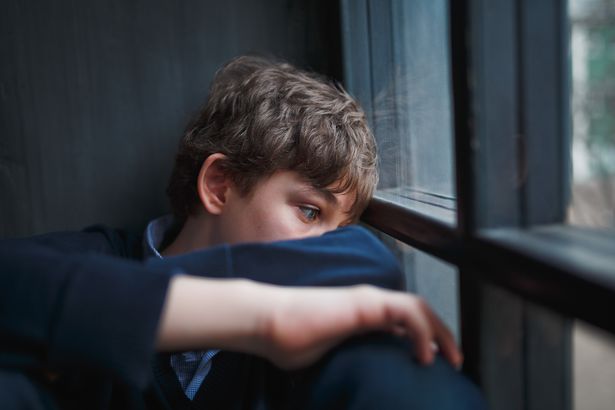
My sense of feeling different to my peers grew at high
school. Not only was I feeling the urges, desires and preoccupations that
accompany puberty, completely disrupting the emotional status quo of childhood.
I was having them in a way that was totally unacceptable. I was on the same
testosterone-fuelled roller coaster as my schoolmates, but they were enjoying
themselves and I was screaming for it to stop. I simultaneously loathed them, and
desired them for their machismo, but above all I envied them because their
experience was ‘normal’.
There was some relief in years eleven and twelve, at least
socially, when I felt like my peers grew up and my sense of otherness
diminished. I found the pubescent sexual energy around me tantalising, yet I
was really not attracted to brashness or roughness. I was drawn to the
tenderness that I saw in romance, and fatherhood. I was ashamed of it at the
time, but now I don’t care that I crave the strength and tenderness of men. In
my youth I was fascinated with men being loving and attentive with their wives
and children, and I was embarrassed about how I couldn’t stop staring at that
young dad at church.
What I could stop, and in fact never started, was acting on
my feelings. That began in puberty and lasted for decades. In my dour Scottish
and Cornish heritage, permission-giving and self-compassion were in short
supply. I have always been the master of keeping a tight lid on it. Gay men are
typecast as horny and profligate. I have realised that while I enjoy a normal
libido, I am curiously chaste.
Permission-giving is the reason why popular culture is so
important. The absence of visible healthy same-sex relationships condemned my
orientation, as loudly as any sermon. Being such an upstanding and moral
household, we never watched Number 96,
the breakthrough soap opera that brought the sexual revolution into Australian
lounge rooms. I was unaware of the early depictions of gay men on Australian
television. The assumption about being a homosexual man was that it was a dark
and lonely life, without the sunshine of children or stable domesticity.
Which partly explains a poignant sub plot to my narrative. When
I was 18, the older brother that I had idolised growing up came out as gay. He
was 30, had never had a serious girlfriend, and read books like The Church and the Healthy Homosexual. But
I had never cottoned on that he might be same-sex attracted. There are none so
blind. Society, my family, and I were not ready in 1980 to embrace his way of
being. Rather than seeing it as the role model I longed for, I perversely doubled
down on my internalised homophobia, turning in on myself, like a pot-bound
plant.
As I think now about the fact that my dear brother was gay
and out, and yet I could not follow in his footsteps, it feels ludicrous at
first reading. But remember in 1984, at Wham!’s
zenith, George Michael could not come out for fear of sabotaging his pop
career. It was the bravest of the brave who went there, and I recognise that
today I stand on the shoulders of giants like my brother. We now get on well,
but for a long time he kept family at arm’s length. I did not get a sense that
he saw himself as a role model, and I’ve never asked him whether he suspected I
was gay. I guess he took my assertions of straightness at face value. When I told him much later of being same-sex
attracted, his somewhat disappointed rejoinder was that he thought he was the
only gay in the village! Thank you, Little
Britain.
As a young person there was not a snowflake’s chance that I
could have formed a romantic or sexual relationship with a boy. I had a couple
of crushes on girls in my high school years but I’m sure they both thought I
was just plain weird. Again, maybe they knew. I joined a conservative Christian
group at uni that pedalled a puritanical and patriarchal view of relationships.
I met a woman with whom I later fell in love, and who agreed that I could pray
away my gay. A few years later I married at 22 and was on my way to having a
family.
I had grown up (or thought I had), and despite my best
efforts, grown up queer. But that is only half the story. I still had to do a
lot of growing into my queerness.
First, I had to stop fighting it. I fought it for all of my
20s. At 24 I joined another conservative Christian organisation that actively
promoted the idea that I could be ‘healed’ from the sin of homosexuality. This
practice is known now as reparative therapy, but there is nothing repairing or
therapeutic about it. It is harmful and abusive.
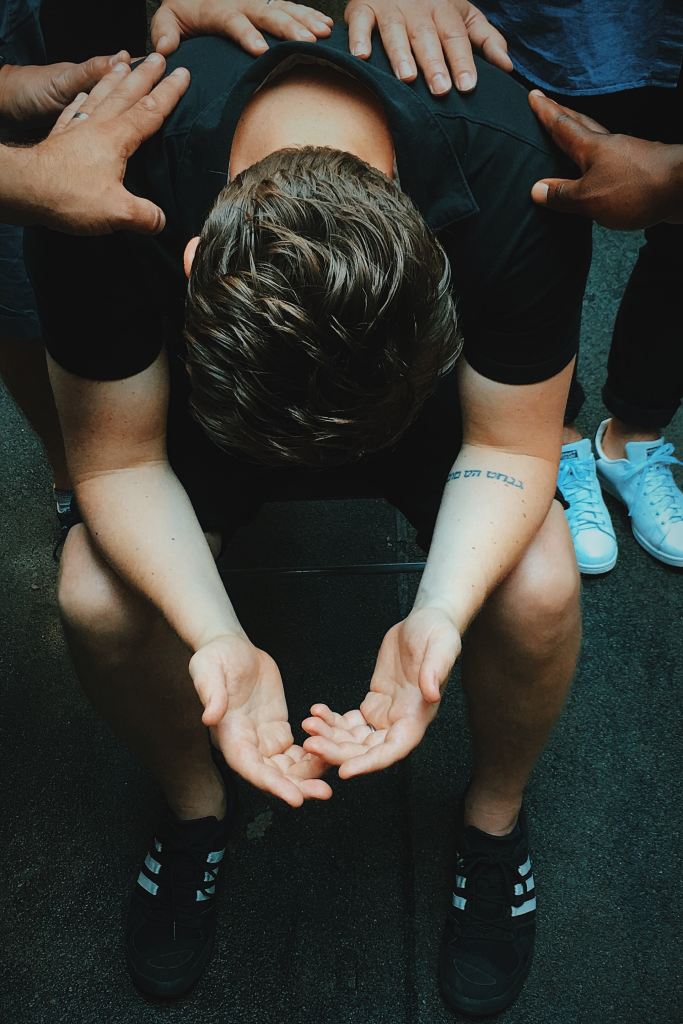
I endured lectures, prayer ministry and exorcisms. I tried
to control my thought life, embrace the ‘father heart of God’, and resist the
demons of same-sex attraction. I was told to believe in the transforming power
of Christ, seek healing for childhood trauma, and stand up straight and stick
my chest out – subtext: like a real man.
Where are those conservatives now, who told me to choose
between my orientation and my faith? I hear that some of them still peddle this
lie. Integrating sexuality and faith is now as seamless to me as integrating
eye colour and faith – it is just a non-issue. In my experience, orientation
and faith both evolve and develop over time, coming to deeper truth. How I have
identified sexually has evolved from ‘gay and happy in a straight
relationship’, to ‘bisexual’, to ‘gay’. How I have identified in faith has
evolved from Christian to maybe ‘post-Christian’. I have journeyed beyond the
faith of my forebears into a deeper experience of my own spirituality, and incorporated
truths I have discovered from other faiths. I’ve sought to replace the verbiage,
noisiness and activity of my Christian tradition with the consciousness, awareness
and silence of others. I think it’s
incredibly lucky that I have kept a faith considering what I put myself
through, and what others put me through.
I did all this willingly. Being healed was what I wanted. I felt
guilty that my eyes always lighted on men when I walked down the street, and
not women like they were supposed to. I devoured books and tapes that proposed
psychological explanations and psychological cures: how to make up for supposedly
unmet needs in childhood and allow God to effectively ‘re-parent’ me.
Eventually I tired of that endeavour and begrudgingly came
to the conclusion that this thing was here to stay. I was able to maintain a
healthy sexual relationship in my marriage, and my orientation was not the main
thing I felt I needed to focus on. Whenever I semi-consciously asked myself how
I was able to have a fulfilling sex life, I shied away from digging too deep.
Sex was a positive thing in my relationship; I worried that if I tried to
consciously reconcile that with being gay, I would undermine its potency and
comfort. If it ain’t broke, don’t fix it.
Into my 30s, I gradually came to embrace my same-sex attraction
as part of who I was. In my 40s I gradually came to enjoy it. Not that I acted
on it, save for the occasional trip to a gay sex shop just to be in the zone.
And even then I did not allow myself any kind of fantasy life. I equated that
with acting out my desires; I was fearful that either might let the genie out
of the bottle.
I felt both in and out of the closet. I had had a long
succession of comings-out, starting young. I had come out to my wife-to-be,
before we were even engaged, when I told her that I thought I was gay. I had
come out to my spiritual ‘leaders’ (!) when I asked them to pray for my healing
from homosexuality. And throughout my adult years, as I formed new friendships
and felt I could trust people, I came out to them too. My straight male friends
– all my friends really – were an important part of my coping and living well with
my situation: gay, and married with a growing family.
Many people suspected of course and some saw through it all,
but with compassion. Like when I attended the 25-year high school reunion. It was
an illuminating experience to be with the boys-to-men with whom I had spent six
years. We had nothing to prove to each other. We had seen the best and the
worst of each other and there was a remarkable ease, even though we had not
seen each other for decades. Their take on my sexuality? ‘You have six kids
now? Wow, at school we all thought you were gay!’ Said without rancour or bile.
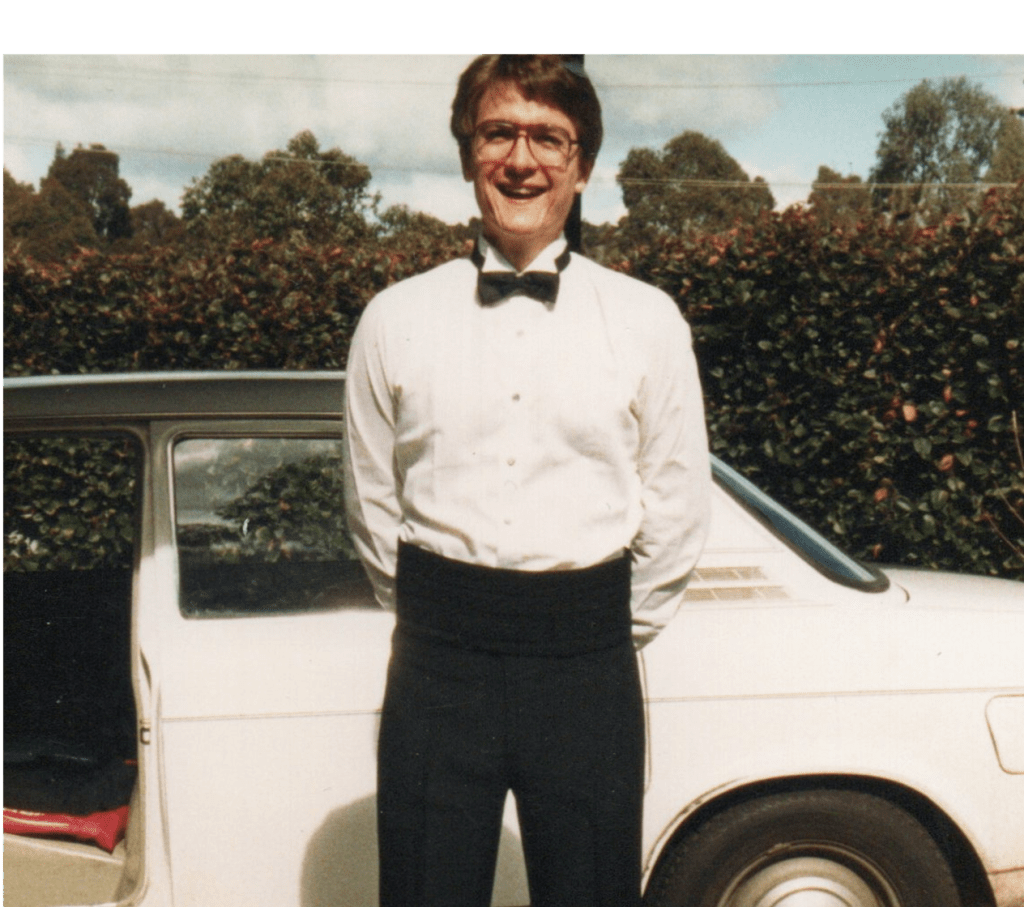
In my 40s I had a mid-life crisis, lost weight, got a tattoo
and started working out. I knew even then – consciously – that my attention to
my physical appearance was about being attractive to other men. I had no one in
particular I was trying to impress. I’m not quite sure what I thought the
end-game might be. Maybe it was an important step of integrating all the parts
of my life – having my external self align with my internal self. But my drive
to be fit and buff was almost unstoppable. In 2011 I had a major shoulder injury,
but I was not dissuaded. I endured months of rehab in order to get back to full
fitness. In 2014 I even did a photobook of artsy muscle shots with a
professional photographer friend. The energy of the sublimated drive of my
sexuality was immense.
Into my 50s the sense of pain became overwhelming: the life
I had chosen, and loved, was preventing me from fulfilling my deepest desires.
I thought that my heart would break if I could not be with a man. At 51 I
became mentally unwell due to it, depressed then manic. I somehow managed to pull
through it and keep on living as I was, but something had shifted without me
realising. I began to allow myself a fantasy life. I started to identify as
bisexual, and came out as such to my colleagues and adult children. And I
joined GAMMA – Gay and Married Men’s Association – a peer support group for
bisexual men.
GAMMA was both helpful and tough. It was helpful to be able
to share my story, have it validated, and hear about how other men navigated
being same-sex attracted while in a straight relationship. It was tough because
it laid my plight bare: I had a wife whom I cared about deeply and who trusted me;
and all around me were stories of the urge and drive to have sex with men. It
seemed universally potent and, contrary to how I was living at the time,
virtually undeniable long term. It was like one tectonic plate pushing into
another, the pressure building and building.
The quake came when I changed therapists on my wife’s
insistence regarding other issues in our marriage. Through learning compassion
for self and a fresh perspective on my marriage, the balance tipped: the forces
pulling me out of the relationship became greater than the forces holding me in.
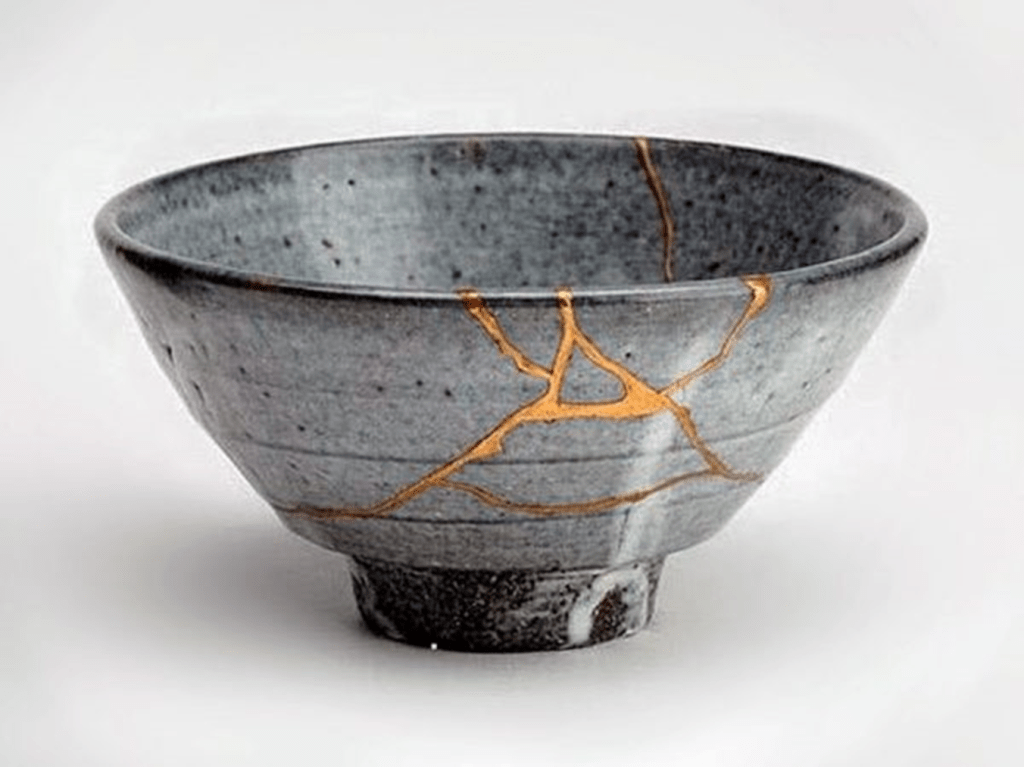
After 31 years it was all over.
I take responsibility for entering a marriage where the very
foundation was flawed. Yes, there was great love there, but there was a massive
lump under the carpet.
And I have compassion for myself. In my Australia there was
no room to grow up queer in society, culture or church.
Coming out at the dissolution of my marriage was a massive
relief. My outsides finally matched my insides and I could live an integrated
life. I told anyone who cared to listen. I spoke publicly about my story to a
couple of hundred people at my workplace for IDAHOBIT. As a result, I was
invited to speak at a motivational event. And in doing publicity for that event
I was able to speak on radio, including the ABC, the Australian public
broadcaster. People still tell me randomly that they heard me that day.
I continued to grow into my queerness. Once GAMMA closed up
due to lack of government funding, I started seeing a man I had met there, who became
my partner. Yes, I found love. With him, and on my own, I have explored and
discovered the gay Melbourne scene. At least some aspects of it, because the
scene is huge. In doing so I have explored and discovered that I am quite
chaste, as I said before. But to not only visit Sircuit, DTs, The Greyhound,
The Laird, Mannhaus, The Peel, Club 80 and other venues – to see them as ‘my
hood’ and ‘my tribe’ – is a joy and a privilege.
And while these things have been thrilling, nothing compares
with being with my partner. Being with him, and finally being able to act on my
feelings, has been like coming home. Whether the days have been bucolic –
dancing and bar-crawling our way through the inner-urban enclaves of Balaclava
and St Kilda – or lean – rebuilding relationships with my children, or living
in separate states while he and I sorted our respective lives out – they have
been dear to my heart. And when I am in his arms, fifty years’ worth of dreams
have finally come true.
When did those dreams start? In my own heart, yes, but also
through reappropriating the popular culture and advertising of my youth. I
clearly remember a TV ad for jeans in the racy 70s. Yes, it was actually pretty
liberal then – the sexual revolution, the cutting edge of nudity in film, like
the Alvin Purple movies, and the
heady days of socially progressive prime minister Gough Whitlam. The TV jeans ad
in question ends with this hairy chested hunk sitting up in bed expectantly,
with his pants draped artfully in the foreground. While curvaceous young women
occupied the rest of the 30 seconds, I knew that I wanted to accept his unspoken invitation at the end.
So, in my formative years, did I find anyone in music or film to model myself on? A few: the rare breed
of caring men that later became known as Sensitive New Age Guys – who were
interested in treating women well, and not as objects. Who talked about their
feelings, and were keen to please their female partners. I could never
understand how men could treat women as targets of raw lust and desire, without
reference to who they were as whole people.
That is until, as a 53 year old who had grown up queer and finally
grown into his queerness, I saw the Boylesque
floorshow at the Greyhound Hotel, the now defunct venue flaunting all things
youthful, gay and sexy. Acres of young male flesh, sweating, strutting and gyrating.
Didn’t I hoot and holler? Didn’t I abandon all decorum? And I finally understood
what my straight male counterparts had been doing all those years, and why.
I finally saw in myself the unabashed, unashamed and
uncensored desire I had seen in my school mates, and men ever since. I had come
to love and enjoy my male sexuality, and my homosexuality. I had embraced both
gentleness and virility.
I had traded in the dumdeedle.
I had found the penis.




 Particularity